
Original Estimate
Original Estimate measures the total initially estimated effort for work items, based on the Original Estimate field set when the work was first planned.
It represents the baseline planned effort and is not affected by time logged or changes to remaining estimates.
This Metric focuses on planning intent, not actual effort, delivery speed, or flow efficiency.
What Question Does Original Estimate Answer?
Original Estimate is designed to answer:
How much effort did we originally plan for?
How Original Estimate Is Calculated
Original Estimate is calculated across all work items included in the dataset. For each work item, the value of the Original Estimate field is used. Values are summed across all included work items, and each work item contributes its Original Estimate value once. Work items in any lifecycle state (including Completed or Closed) are included, as this Metric represents planned effort.
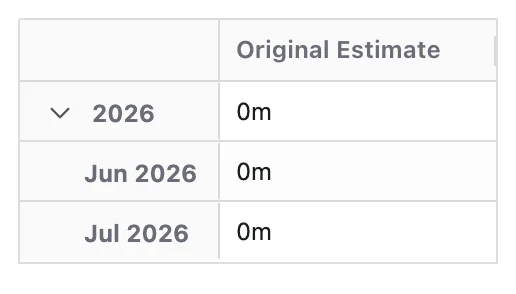
When a Time dimension is applied, work items are grouped based on the selected time field (e.g. Created Date, Resolved Date) and Original Estimate values are aggregated within each time period. Time represents when work items are grouped, not when effort was spent.
Configuration
Original Estimate adds these options to the Metric Name and Description every Metric has:
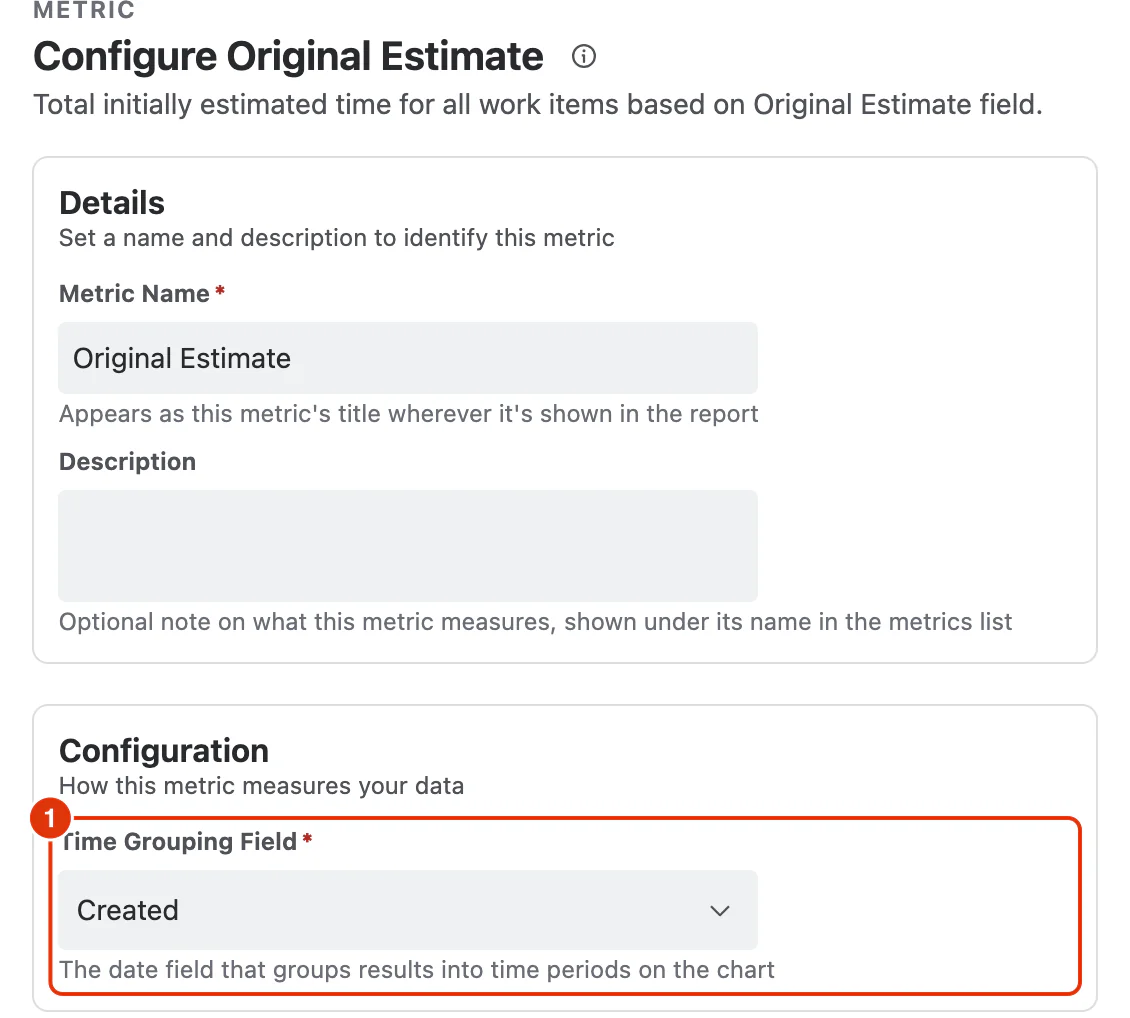
Time Grouping Field (1)
The date field that groups results into time periods when the report has a Time dimension.
What You Can Analyse with Original Estimate
Original Estimate is commonly used to analyse:
Planned Effort
- How much effort was originally planned for a sprint, release, or backlog
- Comparison of planned effort across teams or projects
Planning Accuracy
- Differences between planned effort and delivered work
- Gaps between original estimates and actual time spent
Scope and Change
- Whether planned effort increased due to added work
- Visibility into scope growth during a sprint or release
Estimation Quality
- Work item types or teams that consistently under- or over-estimate
- Long-term trends in estimation reliability